Optimal Allocation Across Alternative Investment Strategies In A Dynamic Framework
Introduction:
The success of Alternative Investments is attributable to both their higher level of expected return per unit of risk than traditional investments, as well as to the portfolio diversification benefits they provide. The benefits of such lightly constrained strategies can further be put to profit by enhancing the investment process in two ways; firstly by employing robust portfolio optimization techniques while including multiple risk criteria (Value at Risk, Extreme Value Theory…) so as to account for the non-linear features of both Alternative Investments returns and investors utility functions, secondly by integrating the views of Alternative Investment managers' to the portfolio construction process. The following document introduces a structure that allows Alternative Investment managers to account for both, investors' and strategies' asymmetric nature. Additionally, this document outlines an approach that allows for the proper apportioning of managers' views to predetermined neutral benchmark weights, and a framework to derive those views in a sound, consistent and tractable manner.
For more information, please see http://www.qmsadv.com/ or send your inquiries to info@qmsadv.com
Tuesday, July 7, 2009


Hedge Funds’ Dynamic Strategic & Tactical Asset Allocation and Dynamic Risk Exposure in a Regime Switching Framework
Introduction:
Hedge funds engage in dynamic trading strategies, use leverage opportunistically, take positions in non-linear instruments and take concentrated bets. These techniques result in non-linear payoffs at the single Hedge Fund and at the Fund of Hedge Fund level. The following approach is therefore to assess Hedge Fund strategies' risks, to forecast Hedge Fund style returns and to construct optimal strategic and tactical hedge fund allocations that reflect the option-like and nonlinear features of those strategies.
Description:
Hedge funds usually exhibit non-normal payoffs for multiple reasons such as the use of derivatives, structured products, and dynamic trading strategies. Further, hedge funds take state-contingent opportunistic bets that account for a significant part of their returns and risks. Despite ever growing research on the topic, most studies on hedge funds' performance so far focused on classical linear factor models, non-parametric models or linear factor models with option like factors.
The proposed framework departs from those approaches and utilizes factor models based on the regime switching theory, where non-linearity in the exposure is captured by factor loadings that are state dependent. The regime switching approach first identifies the current and future likely states of the markets - a stochastic process based on numerous risk factors with forecasting power that identifies and translates the current and future states of the markets in quintiles after which a state dependent factor loading process is able to capture hedge funds’ exposure to the market risk factor in these different states or market conditions.
Empirical results show that switching regime factor models can explain a larger proportion of the variation in returns of hedge funds, as opposed to classical linear factor models, non-parametric models and linear factor models with option like factors. The justification for this greater explanatory power can be linked to both the dynamic nature of hedge funds' strategies and to the tendency of market factors' to synchronize or become more dependent in periods of stress.
For more information, please see http://www.qmsadv.com/ or send your inquiries to info@qmsadv.com
Hedge funds engage in dynamic trading strategies, use leverage opportunistically, take positions in non-linear instruments and take concentrated bets. These techniques result in non-linear payoffs at the single Hedge Fund and at the Fund of Hedge Fund level. The following approach is therefore to assess Hedge Fund strategies' risks, to forecast Hedge Fund style returns and to construct optimal strategic and tactical hedge fund allocations that reflect the option-like and nonlinear features of those strategies.
Description:
Hedge funds usually exhibit non-normal payoffs for multiple reasons such as the use of derivatives, structured products, and dynamic trading strategies. Further, hedge funds take state-contingent opportunistic bets that account for a significant part of their returns and risks. Despite ever growing research on the topic, most studies on hedge funds' performance so far focused on classical linear factor models, non-parametric models or linear factor models with option like factors.
The proposed framework departs from those approaches and utilizes factor models based on the regime switching theory, where non-linearity in the exposure is captured by factor loadings that are state dependent. The regime switching approach first identifies the current and future likely states of the markets - a stochastic process based on numerous risk factors with forecasting power that identifies and translates the current and future states of the markets in quintiles after which a state dependent factor loading process is able to capture hedge funds’ exposure to the market risk factor in these different states or market conditions.
Empirical results show that switching regime factor models can explain a larger proportion of the variation in returns of hedge funds, as opposed to classical linear factor models, non-parametric models and linear factor models with option like factors. The justification for this greater explanatory power can be linked to both the dynamic nature of hedge funds' strategies and to the tendency of market factors' to synchronize or become more dependent in periods of stress.
For more information, please see http://www.qmsadv.com/ or send your inquiries to info@qmsadv.com
Efficient Portfolio Management: A Dynamic Investment Framework
RATIONALE FOR A STRATEGIC ASSET ALLOCATION
A Strategic Asset Allocation (SAA) refers to an ex-ante optimal weighting of asset classes in an investor’s portfolio that aims to achieve the long-term investment objectives as set forth in the investor’s policy statement. It is based on long-term return, risk and correlation expectations for the asset classes considered for the policy portfolio. The fundamental principle of Strategic Asset Allocation is to capture the advantages that come from getting exposure to a variety of asset classes with dissimilar return patterns, effectively diversifying risks across assets without sacrificing return expectations. Diversifying across multiple asset classes can help achieve a portfolio weighted average of volatility that is less than the volatility of each of the individual portfolio components, resulting in a higher portfolio risk-adjusted return.
The goal of a Strategic Asset Allocation is therefore to maximize the risk-adjusted total return of an investor’s strategic portfolio, based on an investor’s guidelines on tracking error risk at both the asset class level and at the overall portfolio level.
A Strategic Asset Allocation (SAA) refers to an ex-ante optimal weighting of asset classes in an investor’s portfolio that aims to achieve the long-term investment objectives as set forth in the investor’s policy statement. It is based on long-term return, risk and correlation expectations for the asset classes considered for the policy portfolio. The fundamental principle of Strategic Asset Allocation is to capture the advantages that come from getting exposure to a variety of asset classes with dissimilar return patterns, effectively diversifying risks across assets without sacrificing return expectations. Diversifying across multiple asset classes can help achieve a portfolio weighted average of volatility that is less than the volatility of each of the individual portfolio components, resulting in a higher portfolio risk-adjusted return.
The goal of a Strategic Asset Allocation is therefore to maximize the risk-adjusted total return of an investor’s strategic portfolio, based on an investor’s guidelines on tracking error risk at both the asset class level and at the overall portfolio level.

I/ THE DERIVATION OF ASSET CLASS ASSUMPTIONS
Deriving Robust Long-Term Asset Class Expectations
II/ FINANCIAL DECISION MAKING PROCESS
1/ Strategic Asset Allocation
2/ Risk Budgeting
3/ Tactical Asset Allocation
III/ PORTFOLIO IMPLEMENTATION
Monitoring and Rebalancing
For more information, please see http://www.qmsadv.com/ or send your inquiries to info@qmsadv.com
Saturday, June 6, 2009
Enhanced Hedge-Fund Index Solution
ALPHA GENERATION VIA TACTICAL HEDGE FUND STYLE TILTS
To maximize the risk-adjusted total return of a diversified portfolio of hedge fund sub-indices by actively overweighting and underweighting the components of the strategic portfolio
To maximize the risk-adjusted total return of a diversified portfolio of hedge fund sub-indices by actively overweighting and underweighting the components of the strategic portfolio
KEY PRODUCT DIFFERENTIATING FACTORS
- Innovative Solution
- Transparent Quantitative Process
- Optimal Portfolio Construction
- Market and economic intuition
THREE STEPS CONSTRUCTION PROCESS
1/ Strategic Allocation
2/ Tactical views and alpha generation
3/ Disciplined and robust portfolio construction framework
Tuesday, September 23, 2008
Hedge fund contagion and liquidity
Hedge fund contagion and liquidity
The finance and economics literatures often use the term contagion to describe a situation where there is excess correlation, and poor performance spreads across countries, asset classes, or investment strategies for reasons not related to correlations in fundamentals.
There are strong evidence of contagion within the hedge fund sector during periods of stress: quantitative analysis revealed that for a number of risk factors, the average probability that a hedge fund style index has extreme poor performance (lower 10% tail) increases from 2% to 21% as the number of other hedge fund style indices with extreme poor performance increases from zero to seven. Changes in funding and asset liquidity seem are found to intensify this contagion effect, where the likelihood of contagion is high when prime brokerage firms have poor performance (which would be expected to affect hedge fund funding liquidity adversely) and when stock market liquidity (a proxy for asset liquidity) is low. Further, contagion is exacerbated when hedge funds experience large outflows as large investors request for withdrawals force hedge funds to liquidate assets in unfavorable circumstances. Yet there is no evidence that contagion in the hedge fund sector is associated with extreme poor performance in the stock and bond markets, yet currency markets seem to worsen when hedge fund contagion is high, consistent with the effects of an unwinding of carry trades. Therefore, there is evidence that hedge fund contagion is associated with extremely poor performance of the currency markets (which is consistent with an unwinding of carry trades), but not of the stock and bond markets.
For more information, please see www.qmsadv.com or send your inquiries to info@qmsadv.com
The finance and economics literatures often use the term contagion to describe a situation where there is excess correlation, and poor performance spreads across countries, asset classes, or investment strategies for reasons not related to correlations in fundamentals.
There are strong evidence of contagion within the hedge fund sector during periods of stress: quantitative analysis revealed that for a number of risk factors, the average probability that a hedge fund style index has extreme poor performance (lower 10% tail) increases from 2% to 21% as the number of other hedge fund style indices with extreme poor performance increases from zero to seven. Changes in funding and asset liquidity seem are found to intensify this contagion effect, where the likelihood of contagion is high when prime brokerage firms have poor performance (which would be expected to affect hedge fund funding liquidity adversely) and when stock market liquidity (a proxy for asset liquidity) is low. Further, contagion is exacerbated when hedge funds experience large outflows as large investors request for withdrawals force hedge funds to liquidate assets in unfavorable circumstances. Yet there is no evidence that contagion in the hedge fund sector is associated with extreme poor performance in the stock and bond markets, yet currency markets seem to worsen when hedge fund contagion is high, consistent with the effects of an unwinding of carry trades. Therefore, there is evidence that hedge fund contagion is associated with extremely poor performance of the currency markets (which is consistent with an unwinding of carry trades), but not of the stock and bond markets.
For more information, please see www.qmsadv.com or send your inquiries to info@qmsadv.com
Wednesday, October 17, 2007
Systematic Risks: Modeling Contemporaneous Equity Index Implied Volatility
MODELING CONTEMPORANEOUS EQUITY INDEX IMPLIED VOLATILITY TO EXPLAIN RECENT MARKET DEVELOPMENTS
Figure2: Value of Selected Explanatory Variables

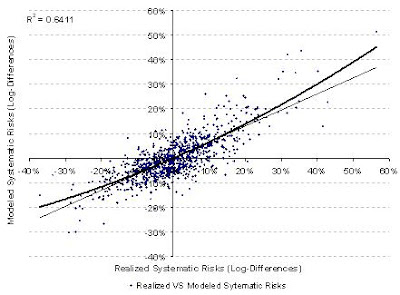
Figure3: Realized versus Modeled Systematic Risks
We observe two well documented phenomena; a positive relationship between the historical and implied volatility indices (clustering effect), and a negative relationship between the implied volatility index and the underlying stock returns. This second phenomenon is asymmetric in nature; negative index returns have a greater impact on implied volatility as an increase in the equity of the firm decreases the firms’ debt to equity ratio (leverage effect) and therefore risks.
The effects of changes in the yield curve (level and slope) are unclear; as an increase in interest rates decreases both the value of debt and equity. The effect of increasing interest rates on firms’ debt to equity ratio and hence on volatility is as a result ambiguous. Additionally, the effects of higher short-term interest rates over the period were typically offset by a flattening or inversion of the yield curve.
In addition, domestic currency appreciation has led to decreases in systematic risks in the domestic economy. Similarly, an increase in oil prices increases the uncertainty in the economy and hence is expected to increase systematic risks. Finally, the volume of contracts traded in the underlying index is expected to be positively correlated with systematic risks.
Based on our volatility model, all significant factors can be considered when inferring the evolution of future short-term volatility levels.
1. Important oscillations in stock indices should sustain higher levels of systematic risks
2. Higher levels of historical volatility should cause comparatively higher levels of systematic risks (clustering effect)
3. The effect of lower short-term interest rate should in part be offset by a steeper slope of the yield curve
4. Continued depreciation of the U.S. Dollar and higher crude oil and commodity prices should also corroborate to higher systematic risks
For more information, please see http://www.qmsadv.com/ or send your inquiries to info@qmsadv.com
Volatility has increased across financial markets in recent months, reflecting two differing interpretations of the current economic environment. Strong global demand fostered confidence in the outlook for industrial and cyclical industries and heightened uncertainties about global demand’s impact on inflation and interest rates, which penalized interest-rate sensitive assets. Additionally, concerns over the health of the U.S. housing and corporate credit markets have introduced further doubts about global economic prospects. This resurgence of uncertainty around future economic developments translated into higher short-term market volatility. In this paper, we employ quantitative techniques to explain the causes of the rise in systematic risks observed on the market.
Investment risks can be divided into systematic and unsystematic risks. Systematic risks refer to non-diversifiable risk factors and are compensated by an expected risk premium. Unsystematic risks, which are investment specific, are idiosyncratic and can be minimized through diversification. While unsystematic risks are known to mainly reflect microeconomic shocks affecting assets’ relative prices, systematic risks are recognized to mainly reflect macroeconomic shocks. In this paper, we employ a framework that decomposes observed levels of market volatility or systematic risk into key fundamental economic and financial variables. Systematic risks, the implicit market price of risk, merely become a function of the selected fundamental explanatory variables introduced in the model. Employing this approach provides an unambiguous and statistically sound approach to explaining the causes and evolution of systematic risks.
To isolate these explanatory variables, we rely on a rigorous and disciplined statistical approach, built on the following precepts:
– Consistency with economic theory and practice: a wide array of economic and market factors are selected and tested.
– Consistency across market and business cycles: Macroeconomic and financial factors are chosen for their ability to explain volatility’s dynamics over multiple economic cycles.
– Capture volatility’s probability distribution function: Relevant financial factors are included to map volatility’s asymmetric probability distribution function.
– Capture dynamic market features: Interaction between economic and financial signals and the variations in volatility’s features.
We explore the contemporaneous relationship between a set of financial and economic fundamental variables and the S&P500 implied volatility index. Theory and empirical evidence suggest that the weekly log-differences of the implied volatility index can be explained in order of importance by
1. The weekly positive and negative log-differences in the underlying stock index (capturing the asymmetric effect of index returns on implied volatility),
2. The weekly log-differences in historical volatility,
3. The weekly log-differences in the slope of the yield curve calculated as the difference between the yield of the ten year government bond and the one-month US interbank interest rate,
4. The weekly log-differences in the volume of open futures contract on the underlying index,
5. The weekly log-differences in the one-month US interbank interest rate,
6. The weekly log-differences in oil prices (WTI/Brent Crude Oil price),
7. And the weekly log-differences in the US Dollar basket.
Most of these variables consistently affect the value of an implied volatility index, some occasionally.
Figure1: Relative Explanatory Power of Selected Variables

Figure2: Value of Selected Explanatory Variables
Figure3: Realized versus Modeled Systematic Risks
We observe two well documented phenomena; a positive relationship between the historical and implied volatility indices (clustering effect), and a negative relationship between the implied volatility index and the underlying stock returns. This second phenomenon is asymmetric in nature; negative index returns have a greater impact on implied volatility as an increase in the equity of the firm decreases the firms’ debt to equity ratio (leverage effect) and therefore risks.
The effects of changes in the yield curve (level and slope) are unclear; as an increase in interest rates decreases both the value of debt and equity. The effect of increasing interest rates on firms’ debt to equity ratio and hence on volatility is as a result ambiguous. Additionally, the effects of higher short-term interest rates over the period were typically offset by a flattening or inversion of the yield curve.
In addition, domestic currency appreciation has led to decreases in systematic risks in the domestic economy. Similarly, an increase in oil prices increases the uncertainty in the economy and hence is expected to increase systematic risks. Finally, the volume of contracts traded in the underlying index is expected to be positively correlated with systematic risks.
Based on our volatility model, all significant factors can be considered when inferring the evolution of future short-term volatility levels.
1. Important oscillations in stock indices should sustain higher levels of systematic risks
2. Higher levels of historical volatility should cause comparatively higher levels of systematic risks (clustering effect)
3. The effect of lower short-term interest rate should in part be offset by a steeper slope of the yield curve
4. Continued depreciation of the U.S. Dollar and higher crude oil and commodity prices should also corroborate to higher systematic risks
For more information, please see http://www.qmsadv.com/ or send your inquiries to info@qmsadv.com
Wednesday, January 24, 2007
Liabilities in Focus: Forcing Plan Managers to Fundamentally Alter Their Strategies
Mitigating individual pension plan’s risks at the expense of enhancing systemic risks: Re-leveraging Defined Benefit Plans’ for the greater good of the hedge fund industry
The ratification of the Pension Protection Act of 2006 in conjunction with expected FASB reforms have increased the transparency of pensions’ funding status while calling for the elimination of actuarial smoothing.
The goal of the Pension Protection Act is to insure the adequate financial support of plans’ funded status. The Act primarily imposes companies to contribute to their pension plans the normal cost of the plan (i.e. service cost) plus the “under-funded” amount amortized over 7 years with interest. Pension plans’ funding formula has also been altered and is now to be used in determining funded status and contribution requirements. In parallel, ERISA funding credits would be based on actual returns on plan assets as opposed to expected rate of return on assets. Additionally, actuarial smoothing techniques have been limited under the new act, thereby increasing volatility of cash contributions.
The conjunction of major regulatory changes in the pension and insurance space around the world, and historically low risk aversion levels that led to compressed risk premia brought additional emphasis on the importance of asset-liability management (ALM). Pension plans’ portfolio structure will be deeply affected by the new legislation, as feasible asset allocations will now be determined after full liability cash flow risk immunization, and as a function of the marginal risk/return to plans’ surplus risk. While the liability-driven investment framework results in a focus shift away from maximizing plan returns and towards minimizing liability cash flow risks, portable alpha redeployment acts as a counterbalance, providing the necessary excess return for sponsors to minimize their contributions.
The Pension Protection Act effectively obliges pension plan managers to break away from the conceptual anchor that constitutes the classical asset optimization framework. Plans’ liabilities are now the new focal point of pension plan managers, where the purpose of plans’ assets is to fund their associated liabilities. In this context, assets’ return dynamics should primarily be geared towards offsetting the dynamics of the plans’ liabilities.
The paper will first investigate the different approaches available in implementing liability-driven solutions and will secondly explore the yield enhancement potential presented by portable alpha strategies.
I/ Liability Driven Investments: Capital efficient solutions to mitigate interest rate risks. The dynamics of plans’ assets/liabilities differential as primary focal point
Traditionally, plan sponsors have been using the asset side of their portfolio to mitigate their liabilities. The lax legal environment in which US pension plans acted to this point resulted in only partial immunization of their plans’ interest rate risks and high exposure to other market risks (equity beta) for return enhancement. More stringent regulations are now constraining plan managers to focus on liabilities’ sensitivity to interest rates; resulting in higher overall allocations to fixed income products. As a result, the immediate consequence of the reform has been to center liabilities at the heart of the asset allocation process. As partial immunization has now become a prerequisite, the optimization framework has been propelled into the asset-liability space, where plan managers’ expected return and risk measures are relative to their liability benchmark.
Optimizations in surplus space and Liability Driven Investment (LDI) strategies can be implemented following two different approaches. The first approach consists in combining traditional fixed income securities such as long-dated bonds and strips, while the second approach relies primarily on derivative instruments _i.e. a combination of Zero Coupon and Inflation-linked Swaps which allow institutional investors to create customized benchmarks mimicking the risk and return profile of their expected cash-outflows.
Pension plans are presented with two investment options:
§ The first option is to select and invest the plan’s assets in a combination of traditional fixed income indices that provide a suitable fit to the key rate duration of the plan’s liabilities,
§ The second option is comparable to the first, but the liability immunization is further complemented by overlaying derivatives (futures/forwards/swaps/structured products and options), or by introducing strips to better replicate the liability cash flow stream. The latter solution offers marginally more flexibility and makes for a more efficient use of capital.
While the conventional approach is appropriate for duration (level) immunization, the method leaves exposure to changes in the shape of the curve (curve duration) and to convexity misalignments.
§ Curve duration mismatch risks _the sensitivity of a portfolio to a steepening of the yield curve_ cannot be hedged efficiently due to the difficulty of matching the distribution of future cash outflows. The very long duration of plans’ liabilities make closer term structure match difficult to achieve, as current securities available in the bond market do not provide sufficient interest rate sensitivity. This risk can be efficiently mitigated for portfolios following an LDI program by paying swaps in the front end of the curve and hedging via receiving swaps in longer dated maturities.
§ Convexity represents the most complex risk to offset, as most current securities are not convex enough compared to plans’ liabilities. This convexity mismatch risk can be mitigated in an LDI framework by using swaps, swaptions and structured products to accurately track cash flows.
§ Additionally, dynamic interest rate hedging programs to prevent drifts in terms of duration (level), curve duration (slope) and convexity differentials can be efficiently implemented by initiating an LDI program.
The ratification of the Pension Protection Act of 2006 in conjunction with expected FASB reforms have increased the transparency of pensions’ funding status while calling for the elimination of actuarial smoothing.
The goal of the Pension Protection Act is to insure the adequate financial support of plans’ funded status. The Act primarily imposes companies to contribute to their pension plans the normal cost of the plan (i.e. service cost) plus the “under-funded” amount amortized over 7 years with interest. Pension plans’ funding formula has also been altered and is now to be used in determining funded status and contribution requirements. In parallel, ERISA funding credits would be based on actual returns on plan assets as opposed to expected rate of return on assets. Additionally, actuarial smoothing techniques have been limited under the new act, thereby increasing volatility of cash contributions.
The conjunction of major regulatory changes in the pension and insurance space around the world, and historically low risk aversion levels that led to compressed risk premia brought additional emphasis on the importance of asset-liability management (ALM). Pension plans’ portfolio structure will be deeply affected by the new legislation, as feasible asset allocations will now be determined after full liability cash flow risk immunization, and as a function of the marginal risk/return to plans’ surplus risk. While the liability-driven investment framework results in a focus shift away from maximizing plan returns and towards minimizing liability cash flow risks, portable alpha redeployment acts as a counterbalance, providing the necessary excess return for sponsors to minimize their contributions.
The Pension Protection Act effectively obliges pension plan managers to break away from the conceptual anchor that constitutes the classical asset optimization framework. Plans’ liabilities are now the new focal point of pension plan managers, where the purpose of plans’ assets is to fund their associated liabilities. In this context, assets’ return dynamics should primarily be geared towards offsetting the dynamics of the plans’ liabilities.
The paper will first investigate the different approaches available in implementing liability-driven solutions and will secondly explore the yield enhancement potential presented by portable alpha strategies.
I/ Liability Driven Investments: Capital efficient solutions to mitigate interest rate risks. The dynamics of plans’ assets/liabilities differential as primary focal point
Traditionally, plan sponsors have been using the asset side of their portfolio to mitigate their liabilities. The lax legal environment in which US pension plans acted to this point resulted in only partial immunization of their plans’ interest rate risks and high exposure to other market risks (equity beta) for return enhancement. More stringent regulations are now constraining plan managers to focus on liabilities’ sensitivity to interest rates; resulting in higher overall allocations to fixed income products. As a result, the immediate consequence of the reform has been to center liabilities at the heart of the asset allocation process. As partial immunization has now become a prerequisite, the optimization framework has been propelled into the asset-liability space, where plan managers’ expected return and risk measures are relative to their liability benchmark.
Optimizations in surplus space and Liability Driven Investment (LDI) strategies can be implemented following two different approaches. The first approach consists in combining traditional fixed income securities such as long-dated bonds and strips, while the second approach relies primarily on derivative instruments _i.e. a combination of Zero Coupon and Inflation-linked Swaps which allow institutional investors to create customized benchmarks mimicking the risk and return profile of their expected cash-outflows.
Pension plans are presented with two investment options:
§ The first option is to select and invest the plan’s assets in a combination of traditional fixed income indices that provide a suitable fit to the key rate duration of the plan’s liabilities,
§ The second option is comparable to the first, but the liability immunization is further complemented by overlaying derivatives (futures/forwards/swaps/structured products and options), or by introducing strips to better replicate the liability cash flow stream. The latter solution offers marginally more flexibility and makes for a more efficient use of capital.
While the conventional approach is appropriate for duration (level) immunization, the method leaves exposure to changes in the shape of the curve (curve duration) and to convexity misalignments.
§ Curve duration mismatch risks _the sensitivity of a portfolio to a steepening of the yield curve_ cannot be hedged efficiently due to the difficulty of matching the distribution of future cash outflows. The very long duration of plans’ liabilities make closer term structure match difficult to achieve, as current securities available in the bond market do not provide sufficient interest rate sensitivity. This risk can be efficiently mitigated for portfolios following an LDI program by paying swaps in the front end of the curve and hedging via receiving swaps in longer dated maturities.
§ Convexity represents the most complex risk to offset, as most current securities are not convex enough compared to plans’ liabilities. This convexity mismatch risk can be mitigated in an LDI framework by using swaps, swaptions and structured products to accurately track cash flows.
§ Additionally, dynamic interest rate hedging programs to prevent drifts in terms of duration (level), curve duration (slope) and convexity differentials can be efficiently implemented by initiating an LDI program.
Sunday, January 21, 2007
The Portable Alpha Trade-Off: Beta Leverage for Alpha Diversification
A “revolution’, a “paradigm shift”, something that will “alter the business of investing” and “turn investing on its head”. These phrases have all been used to hail the rise of portable alpha. What is portable alpha and will it stand up to its billing? The idea hinges on the separation of the returns of assets invested in a benchmark, or beta, and those derived from the skill of an asset manager, known as alpha.
For example, if the stock market returns 10 per cent and a fund returns 15 per cent, 10 per cent of it is beta and 5 per cent is purely down to the fund manager’s skill, the alpha.
Pension fund portfolios have tended to task fund managers with outperforming a benchmark by establishing overweight or underweight positions relative to the benchmark. Such funds traditionally only invested in stocks within the benchmark and were therefore restricted. This also meant that the beta and alpha were bundled together. By isolating beta from alpha, funds can match their long-term liabilities by keeping the beta part of their portfolio but also seek higher returns from a wider range of assets and managers. This alpha can then be ported – or added back in – to the portfolio.
Types of portable alpha
Portable alpha products are available in various forms, either bundled, where the fund manager offers the beta and its own alpha products, or unbundled, where investors get the beta from somewhere else, or acquire it themselves. Pension funds with fewer resources would tend to choose the former, whereas funds sophisticated enough to obtain their own beta cheaply may choose the latter.
A key element in capturing portable alpha is the use of exchange-traded derivatives. First it is necessary to secure your beta by buying an equity index or bond future which, through the use of gearing, can be bought at a fraction of the cost of the underlying product. This can be as small as 0.35 per cent for short duration bond futures and 8 per cent or more for equity index futures, which makes the capture of beta cheap and efficient.
Benefits of executing portable alpha strategies with futures: they are unaffected by capacity constraints and have low market impact; the market is fully transparent; daily, independent mark-to-market valuation; a central clearing house reduces counterparty risk; margin offsets available between benchmark/beta futures position; and using futures for your alpha gives additional leverage.
After choosing where to find the required alpha, the investor must then “purify” it from any benchmark returns by selling appropriate amounts of futures on the benchmark in which he has initially invested. The process of purification is necessary because, while the investor wants the fund manager’s skill, he does not want exposure to the market that the manager is investing in.
For example, a European pension fund that needed to match its long-term liabilities could get that exposure cheaply by buying a European bond future, such as the Euro-Bond traded at Eurex. It could then choose from the entire universe of assets to get alpha, for example, from commodities, equities or hedge funds. For one bond futures contract worth €100m, the investor would pay the initial margin of €1.4m, which allows him to leverage his capital. That is, for €100m exposure he only has to pay €1.4m to replicate the returns of his benchmark. He then has 98.6 per cent of his cash left to fund his futures position and buy his alpha.
Byron Baldwin, business development for Eurex, says: “The benefit for the institutional investor is that they pay next to nothing for their beta to match their portfolio with futures. They only pay for the alpha – the fund manager’s skill.
“Portable alpha is becoming absolutely huge. Now there is a major equity and bond future in every major marketplace in the world, the institutional investor can get beta from a benchmark return cheaply and efficiently using futures. And usually they are very liquid.” The idea is particularly useful given the fact that pension fund solvency ratios are continuing to decline. This increases the pressure on funds to extract more from investment strategies to match liabilities.
Considerations
There are a number of important considerations when conducting a portable alpha strategy. First, because it involves futures, one must have a structure in place to manage the cash in the deposit on your futures position. Many managers offering portable alpha products will manage the money on behalf of the pension fund. Second, it is important for the alpha generating asset to be uncorrelated with the benchmark. This may not be as easy as it sounds. A number of pension funds view hedge funds and funds of funds as their primary source of alpha return within their asset allocation. Another consideration is tracking error. Futures are used to obtain market exposure to replicate the benchmark. The closer the relationship in the futures contract to the investor’s benchmark, the lower the tracking error. Roll risk can occur because futures are usually delivered quarterly. To maintain the beta benchmarking exposure as each delivery approaches, you need to switch from one delivery month to the next which incurs costs. As the spread between two futures contracts moves, changes in the spread will affect the performance of the beta investment.
It is important to remember that there is a cost to extracting the beta from an alpha investment. Investments which can do this cheaply, or indeed have no beta element, are the most attractive portable alpha vehicles.
Reward
Institutional investors are faced with a world of low interest rates and low equity returns. By separating alpha and beta investment, and obtaining their benchmark investment cheaply with the use of futures, an institutional investor can concentrate on sourcing alpha returns. This also allows him to port the skills of any asset manager to its benchmark portfolio.
“For those who can accept and adapt to the new investing environment, the reward may be enhanced performance in a lower return environment.”
A carefully planned Strategic Asset Allocation / Risk Budget implemented in a Portable Alpha framework in conjonction with the capability to efficiently replicate hedge fund index performance with futures and option products will open venues for smaller institutional and individual investors to generate abnormal positive returns at predefined risk levels.
For example, if the stock market returns 10 per cent and a fund returns 15 per cent, 10 per cent of it is beta and 5 per cent is purely down to the fund manager’s skill, the alpha.
Pension fund portfolios have tended to task fund managers with outperforming a benchmark by establishing overweight or underweight positions relative to the benchmark. Such funds traditionally only invested in stocks within the benchmark and were therefore restricted. This also meant that the beta and alpha were bundled together. By isolating beta from alpha, funds can match their long-term liabilities by keeping the beta part of their portfolio but also seek higher returns from a wider range of assets and managers. This alpha can then be ported – or added back in – to the portfolio.
Types of portable alpha
Portable alpha products are available in various forms, either bundled, where the fund manager offers the beta and its own alpha products, or unbundled, where investors get the beta from somewhere else, or acquire it themselves. Pension funds with fewer resources would tend to choose the former, whereas funds sophisticated enough to obtain their own beta cheaply may choose the latter.
A key element in capturing portable alpha is the use of exchange-traded derivatives. First it is necessary to secure your beta by buying an equity index or bond future which, through the use of gearing, can be bought at a fraction of the cost of the underlying product. This can be as small as 0.35 per cent for short duration bond futures and 8 per cent or more for equity index futures, which makes the capture of beta cheap and efficient.
Benefits of executing portable alpha strategies with futures: they are unaffected by capacity constraints and have low market impact; the market is fully transparent; daily, independent mark-to-market valuation; a central clearing house reduces counterparty risk; margin offsets available between benchmark/beta futures position; and using futures for your alpha gives additional leverage.
After choosing where to find the required alpha, the investor must then “purify” it from any benchmark returns by selling appropriate amounts of futures on the benchmark in which he has initially invested. The process of purification is necessary because, while the investor wants the fund manager’s skill, he does not want exposure to the market that the manager is investing in.
For example, a European pension fund that needed to match its long-term liabilities could get that exposure cheaply by buying a European bond future, such as the Euro-Bond traded at Eurex. It could then choose from the entire universe of assets to get alpha, for example, from commodities, equities or hedge funds. For one bond futures contract worth €100m, the investor would pay the initial margin of €1.4m, which allows him to leverage his capital. That is, for €100m exposure he only has to pay €1.4m to replicate the returns of his benchmark. He then has 98.6 per cent of his cash left to fund his futures position and buy his alpha.
Byron Baldwin, business development for Eurex, says: “The benefit for the institutional investor is that they pay next to nothing for their beta to match their portfolio with futures. They only pay for the alpha – the fund manager’s skill.
“Portable alpha is becoming absolutely huge. Now there is a major equity and bond future in every major marketplace in the world, the institutional investor can get beta from a benchmark return cheaply and efficiently using futures. And usually they are very liquid.” The idea is particularly useful given the fact that pension fund solvency ratios are continuing to decline. This increases the pressure on funds to extract more from investment strategies to match liabilities.
Considerations
There are a number of important considerations when conducting a portable alpha strategy. First, because it involves futures, one must have a structure in place to manage the cash in the deposit on your futures position. Many managers offering portable alpha products will manage the money on behalf of the pension fund. Second, it is important for the alpha generating asset to be uncorrelated with the benchmark. This may not be as easy as it sounds. A number of pension funds view hedge funds and funds of funds as their primary source of alpha return within their asset allocation. Another consideration is tracking error. Futures are used to obtain market exposure to replicate the benchmark. The closer the relationship in the futures contract to the investor’s benchmark, the lower the tracking error. Roll risk can occur because futures are usually delivered quarterly. To maintain the beta benchmarking exposure as each delivery approaches, you need to switch from one delivery month to the next which incurs costs. As the spread between two futures contracts moves, changes in the spread will affect the performance of the beta investment.
It is important to remember that there is a cost to extracting the beta from an alpha investment. Investments which can do this cheaply, or indeed have no beta element, are the most attractive portable alpha vehicles.
Reward
Institutional investors are faced with a world of low interest rates and low equity returns. By separating alpha and beta investment, and obtaining their benchmark investment cheaply with the use of futures, an institutional investor can concentrate on sourcing alpha returns. This also allows him to port the skills of any asset manager to its benchmark portfolio.
“For those who can accept and adapt to the new investing environment, the reward may be enhanced performance in a lower return environment.”
A carefully planned Strategic Asset Allocation / Risk Budget implemented in a Portable Alpha framework in conjonction with the capability to efficiently replicate hedge fund index performance with futures and option products will open venues for smaller institutional and individual investors to generate abnormal positive returns at predefined risk levels.
Replicating Hedge Fund Performance By Way Of Trading Futures Contracts
The hedge fund universe is now getting so crowded that there is just not enough good performance to go around. With relatively low barriers to enter into the hedge fund industry, just how much “alpha” is out there, on average, considering the large number of participants? And will the trend of more assets going into a larger number of hedge funds continue?
City University London's Professor of Risk Management and Director of the Alternative Investment Research Centre at the Cass Business School Harry Kat, as well as those from other famous researchers [Lo, Jaeger, etc.], provide various statistics as part of the argument to validate their work. In the case of Kat and his associate, Helder Palaro, they have developed solutions which, according to the recent articles, is now being used by a small number of institutional investors. It is with this program that investors have the means to build portfolios based on Kat’s research.
According to Kat: “In most cases, managers aren't good enough to make up for the massive fees that they charge. The combination of excessive fees and minimal opportunity in the market makes alternative investments really doubtful in terms of their value for portfolios.”
Essentially, through broad beta exposures chosen from a list of 78 different futures contracts managed on a highly active basis, the program makes any number of allocation decisions so as to achieve the desired amount of statistical characteristics [correlation, volatility, etc.].
City University London's Professor of Risk Management and Director of the Alternative Investment Research Centre at the Cass Business School Harry Kat, as well as those from other famous researchers [Lo, Jaeger, etc.], provide various statistics as part of the argument to validate their work. In the case of Kat and his associate, Helder Palaro, they have developed solutions which, according to the recent articles, is now being used by a small number of institutional investors. It is with this program that investors have the means to build portfolios based on Kat’s research.
According to Kat: “In most cases, managers aren't good enough to make up for the massive fees that they charge. The combination of excessive fees and minimal opportunity in the market makes alternative investments really doubtful in terms of their value for portfolios.”
Essentially, through broad beta exposures chosen from a list of 78 different futures contracts managed on a highly active basis, the program makes any number of allocation decisions so as to achieve the desired amount of statistical characteristics [correlation, volatility, etc.].
Subscribe to:
Posts (Atom)